
OSCE Border Management Staff College (BMSC)
Promoting Innovation, Security, and Co-operation Across Borders
Our Mission
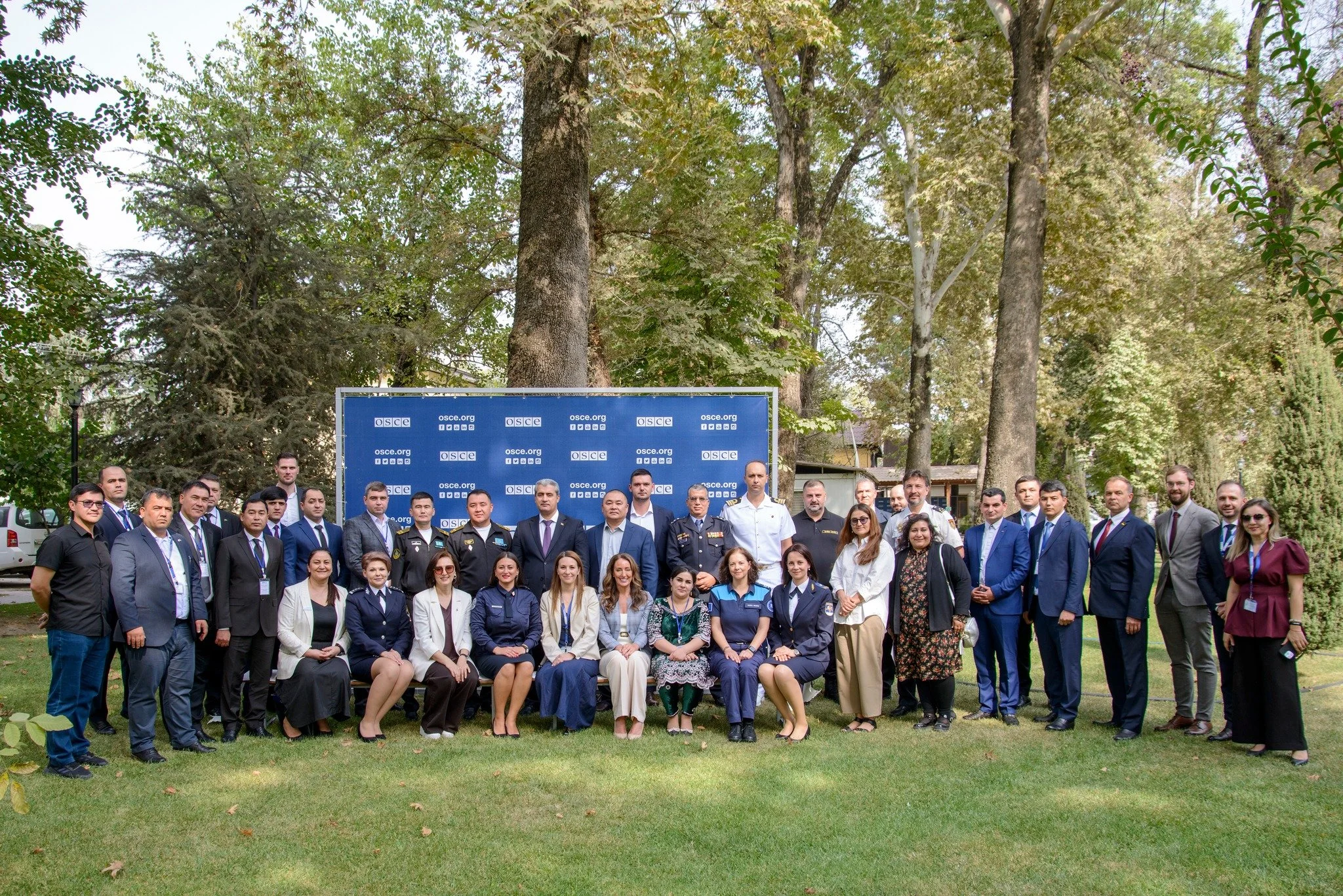
Established in 2009, the OSCE Border Management Staff College (BMSC) serves as a trusted platform for strengthening border security and co-operation across the OSCE region. What began as a response to critical challenges along the Afghan border has evolved into a leading centre for professional education in border management.
The BMSC brings together border professionals from diverse agencies and regions to build leadership, enhance operational effectiveness, and promote co-operation across borders. Through advanced, practice-oriented training, the College supports the OSCE’s 57 participating States and 11 Partners for Co-operation in addressing complex transnational threats while fostering trust, communication, and collaboration with communities.
Now in its third project phase, the BMSC continues to modernize its curriculum to reflect emerging risks, regional dynamics, and the responsible use of new technologies. Its mission is to develop a new generation of border security leaders equipped to manage today’s challenges through effective governance, international co-operation, and a shared commitment to secure and open borders.
Our Programmes
30-Day Border Management Staff Course
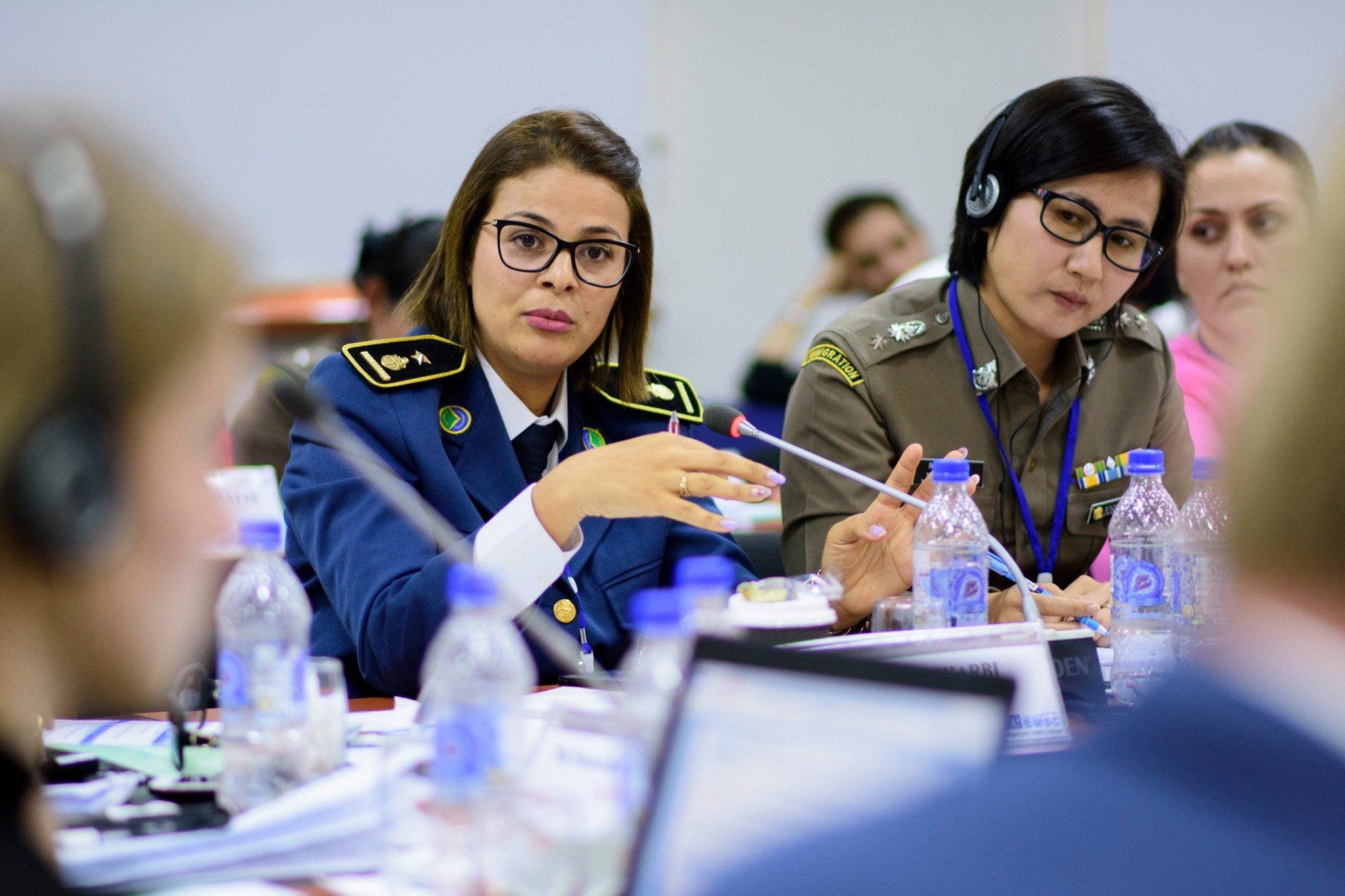
The BMSC’s flagship 30-day Staff Course is designed to prepare border management professionals for the realities of today’s complex security environment. Bringing together mid- to senior-level officials from across the OSCE region, the course strengthens leadership, operational planning, and inter-agency co-operation while addressing transnational challenges such as trafficking, smuggling, and irregular migration.
Delivered in a highly interactive and practice-oriented format, the Staff Course combines expert instruction with case studies, simulations, field visits, and peer-to-peer exchange. Participants learn from one another’s operational experiences, build lasting professional networks, and develop practical tools they can apply—and replicate—within their home institutions. The course provides a foundation for sustained regional co-operation and more effective, coordinated border management.

Webinar Series
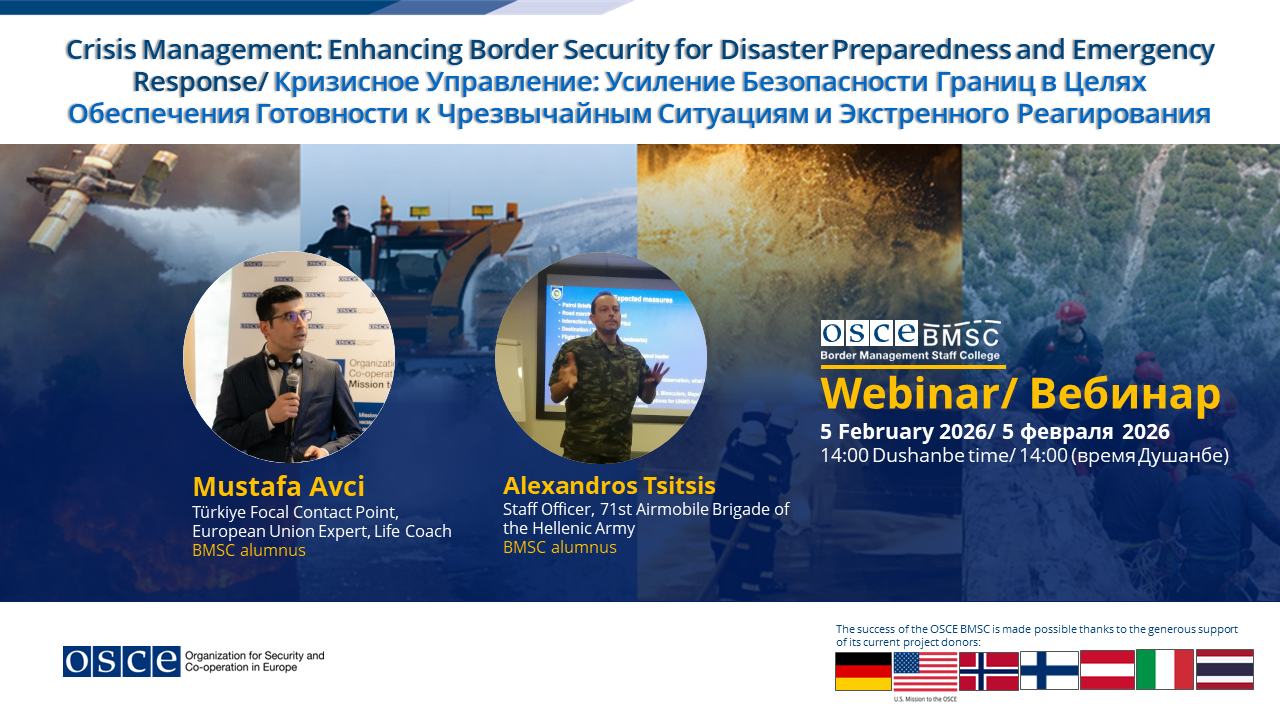
The BMSC Webinar Series offers ongoing, timely learning for border management professionals navigating an evolving security landscape. Delivered monthly, the series brings together experts and practitioners from across the OSCE region to explore emerging risks, operational challenges, and innovative responses in border security.
Webinar topics range from cyber threats to border infrastructure and the responsible use of biometric and AI technologies, to countering the trafficking of small arms and light weapons and strengthening co-ordinated customs practices. Designed as interactive, practitioner-focused discussions, the webinars promote real-time exchange of experience and expertise, reinforce professional networks, and support informed, up-to-date decision-making across agencies and borders.
BMSC Alumni Network
With more than 15 years of graduates, the BMSC Alumni Network is a dynamic community of border management professionals committed to secure, open, and well-co-ordinated borders. The network connects alumni across agencies, countries, and regions, creating a trusted space for continued exchange, collaboration, and peer support.
Through webinars, regional meetings, and joint initiatives, alumni remain actively engaged long after completing their course—sharing operational insights, strengthening professional relationships, and contributing to practical solutions to cross-border challenges. This sustained engagement enhances collective capacity and cooperation across the OSCE region, making the Alumni Network one of the College’s most lasting and impactful contributions to regional security.
To learn more about alumni activities, regional networks, and opportunities to get involved, visit the Alumni Network page.
Thank You to Our Donors
Since its establishment in 2009, the College has operated as an extra-budgetary project made possible through the generous financial support of numerous participating States and partners for Co-operation, including Andorra, Austria, Belgium, Denmark, Finland, France, Germany, Ireland, Italy, Japan, Kazakhstan, Lithuania, Luxembourg, the Netherlands, Norway, Spain, Slovakia, Sweden, Switzerland, Turkey, the United Kingdom, and the United States.